5 Advantages of Non-Compressed Hydrogen Fuel Cell System Over Legacy Fuel Models
Hydrogen has promised zero emissions for decades, but real-world deployment has been held back by cost, complexity, and infrastructure.
Commercial mobility operators face mounting pressure. Battery-electric vehicles struggle with long charging cycles and grid dependence. CNG fleets face fuel volatility and emissions constraints. Conventional hydrogen solutions, while clean, rely on high-pressure storage and cryogenic handling that make infrastructure expensive, slow to deploy, and difficult to scale.
A non-compressed hydrogen fuel cell system takes a fundamentally different approach. Instead of forcing hydrogen into high-pressure, centralized models, it simplifies how hydrogen is produced, stored, distributed, and used, making clean mobility practical for everyday fleet operations.
For OEMs and fleet operators, this shift unlocks tangible advantages: lower ecosystem cost, faster deployment, decentralized hydrogen availability, and operational models that fit real-world workflows. Non-compressed hydrogen fuel cell systems are not positioned to outperform compressed hydrogen on range or refueling speed; their advantage lies in infrastructure simplicity, safety, cost structure, and decentralized deployment.
Before we explore each advantage in detail, here’s a quick snapshot of what distinguishes non-compressed hydrogen in commercial mobility:
- Lower total cost of ownership at the ecosystem level
- Safer, simpler infrastructure that deploys faster
- Decentralized hydrogen production and local distribution
- Operational flexibility for commercial fleets
- Zero-emission mobility that is economically deployable
Let’s now break down how non-compressed hydrogen fuel cell systems overcome them one by one.
What Makes a Non-Compressed Hydrogen Fuel Cell System Different
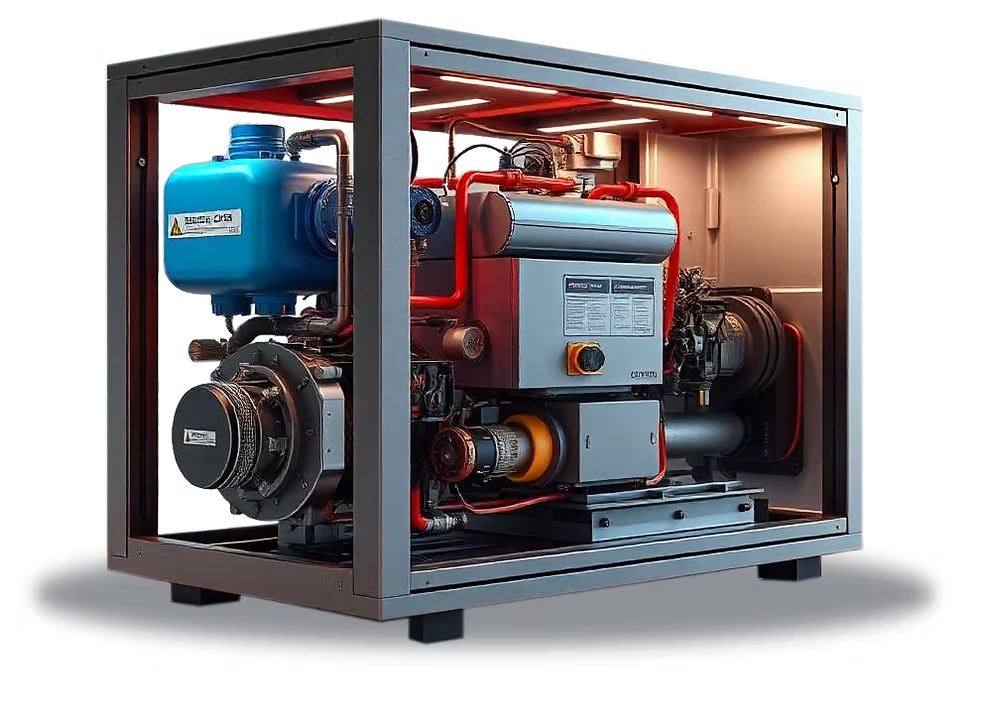
Modular non-compressed hydrogen fuel cell system designed for safe, scalable commercial deployment.
Explore how non-compressed hydrogen fuel cell systems simplify real-world deployment by eliminating high-pressure storage requirements.
#1. Lower Total Cost of Ownership at the Ecosystem Level
What is it?
A non-compressed hydrogen fuel cell system eliminates hydrogen compression and liquefaction, removing high-pressure tanks, cryogenic equipment, and safety subsystems across production, storage, transport, and refueling infrastructure.
Why does it matter?
In hydrogen mobility, most cost sits outside the vehicle. Compression, cryogenics, safety zoning, and permitting dominate capital spend. By operating at low pressure, this fuel cell system reduces infrastructure complexity, maintenance overhead, and regulatory burden, delivering lower total cost of ownership across the complete hydrogen fuel cell ecosystemnot just the vehicle.
Real-world example
HyZero has integrated a low-power, non-compressed hydrogen fuel cell system into an OEM three-wheeler platform, validating that commercial operation is possible without high-pressure storage, compression equipment, or complex safety infrastructure, key contributors to hydrogen ecosystem cost.
HyZero has integrated a low-power, non-compressed hydrogen fuel cell system into an OEM three-wheeler platform, validating that commercial operation is possible without high-pressure storage, compression equipment, or complex safety infrastructure, key contributors to hydrogen ecosystem cost.
Pro tip:
When assessing a fuel cell system, calculate total cost at the ecosystem level, including production, storage, transport, safety compliance, and refueling, not just vehicle cost. Non-compressed architectures consistently reduce hidden infrastructure and regulatory expenses that dominate long-term TCO.
#2. Safer, Simpler Infrastructure That Deploys Faster
What is it?
A non-compressed hydrogen fuel cell system stores and handles hydrogen at or near atmospheric pressure, avoiding 350–700 bar storage or cryogenic temperatures required by conventional hydrogen systems.
Why does it matter?
High-pressure hydrogen infrastructure requires exclusion zones, specialized construction, and lengthy permitting. These factors delay pilots and inflate risk. Low-pressure hydrogen simplifies safety compliance, allowing refueling and storage systems to be installed within existing fleet facilities, accelerating deployment timelines and reducing capital exposure for fuel cell technology rollouts.

Low-pressure hydrogen infrastructure simplifies safety compliance and shortens deployment timelines.
Real-world example:
The global hydrogen fueling station market, projected to reach USD 2.76 billion by 2035, reflects the cost intensity of high-pressure infrastructure. Non-compressed hydrogen avoids much of this capital burden by design.
The global hydrogen fueling station market, projected to reach USD 2.76 billion by 2035, reflects the cost intensity of high-pressure infrastructure. Non-compressed hydrogen avoids much of this capital burden by design.
Pro tip:
If speed-to-deployment matters, prioritize fuel cell technology that avoids high-pressure or cryogenic handling. Lower safety zoning, simpler permits, and conventional construction standards significantly shorten pilot timelines and reduce capital risk.
#3. Decentralized Hydrogen Production and Local Distribution
What is it?
A non-compressed hydrogen fuel cell system enables hydrogen to be produced, stored, and retailed locally, without compression or liquefaction, supporting decentralized manufacture, distribution, and a simplified hydrogen delivery system.
Why does it matter?
Centralized hydrogen models depend on intermittent renewables, energy-intensive compression, and long-distance transport. This drives cost and inefficiency. Decentralized, non-compressed hydrogen aligns production with local demand, eliminates transport losses, and reduces capital intensity, unlocking scalable hydrogen fuel cell vehicles where centralized infrastructure is impractical.
Real-world example
HyZero’s decentralized approach converts municipal and agricultural bio-waste into biohydrogen locally, refilling cartridges near production sites and retailing hydrogen without compression, supporting a cost path toward $1/kg retail hydrogen.
HyZero’s decentralized approach converts municipal and agricultural bio-waste into biohydrogen locally, refilling cartridges near production sites and retailing hydrogen without compression, supporting a cost path toward $1/kg retail hydrogen.
Pro tip
Evaluate hydrogen strategies by where hydrogen is produced and retailed. Decentralized, non-compressed production paired with local consumption eliminates transport losses and compression costs, often the largest economic bottlenecks in hydrogen fuel cell vehicles.
#4. Operational Flexibility for Commercial Fleets
What is it?
A non-compressed hydrogen fuel cell system supports replenishment models, such as low-pressure refills or cartridge swaps, that align with depot operations and daily fleet workflows.
Why does it matter?
Battery-electric vehicles impose long charging windows and grid dependency. Compressed hydrogen adds safety complexity at depots. Non-compressed hydrogen integrates cleanly into existing fleet routines without high-pressure procedures, improving uptime predictability and reducing operational friction for hydrogen fuel cell vehicles in dense urban environments.

Fuel Cell Commercial Vehicle Market growth chart showing global market value rising from USD 1.1 billion in 2020 to USD 66.2 billion by 2035, with a projected CAGR of 31.4%.
Real-world example:
The global fuel cell commercial vehicle market is projected to grow from USD 4.3 billion in 2025 to USD 66.2 billion by 2035 (31.4% CAGR), driven largely by fleet demand for predictable uptime and simpler depot integration enabled by low-pressure storage and handling models, key advantages over grid-dependent battery-electric operations.
The global fuel cell commercial vehicle market is projected to grow from USD 4.3 billion in 2025 to USD 66.2 billion by 2035 (31.4% CAGR), driven largely by fleet demand for predictable uptime and simpler depot integration enabled by low-pressure storage and handling models, key advantages over grid-dependent battery-electric operations.
Pro tip:
Design hydrogen fuel cell vehicle workflows around real fleet behavior, driver shifts, depot dwell time, and route density. Non-compressed systems integrate more naturally into daily operations by avoiding high-pressure safety procedures that disrupt fleet routines.

#5. Zero-Emission Mobility That Is Economically Deployable
What is it?
A non-compressed hydrogen fuel cell system generates electricity electrochemically, emitting only water vapor, while avoiding high-pressure storage that increases cost and deployment barriers.
Why does it matter?
Zero emissions alone do not guarantee adoption. Compressed hydrogen systems remain capital-heavy, limiting real-world scale. Non-compressed hydrogen removes infrastructure cost barriers, making emission-free power solutions financially viable for smaller vehicles, urban fleets, and emerging markets, not just flagship pilots.
Real-world example
According to the U.S. Department of Energy hydrogen fuel cell vehicles emit no harmful tailpipe pollutants, making them compliant with strict urban air-quality regulations. However, the DOE also highlights that infrastructure cost remains a primary barrier to hydrogen adoption. By eliminating compression and high-pressure storage, non-compressed hydrogen systems directly address this bottleneck, allowing zero-emission fuel cell vehicles to be deployed without the capital intensity of traditional hydrogen stations.
According to the U.S. Department of Energy, hydrogen fuel cell vehicles emit no harmful tailpipe pollutants, making them compliant with strict urban air-quality regulations. However, the DOE also highlights that infrastructure cost remains a primary barrier to hydrogen adoption. By eliminating compression and high-pressure storage, non-compressed hydrogen systems directly address this bottleneck, allowing zero-emission fuel cell vehicles to be deployed without the capital intensity of traditional hydrogen stations.
Pro tip:
Zero-emission impact is maximized when hydrogen is produced locally from renewable or bio-based sources and delivered without compression. This is where non-compressed hydrogen architectures unlock both environmental and economic sustainability, not just regulatory compliance.
How a Non-Compressed Hydrogen Fuel Cell System Works

How a non-compressed hydrogen fuel cell system delivers power using cartridge-based hydrogen, simplified flow control, and modular infrastructure.
Key Takeaway
Non-compressed hydrogen fuel cell systems remove the biggest barrier to hydrogen mobility: infrastructure cost and complexity. By eliminating compression and cryogenic handling, they enable safer deployment, lower total ecosystem cost, and decentralized hydrogen supply. Real-world progress by implementation-focused innovators like Hyzero shows how this approach makes zero-emission 3-wheelers commercially viable, scalable, and ready for everyday fleet operations.
TL;DR
- Lower System Cost: No compression or cryogenics reduces total ecosystem cost.
- Safer Deployment: Low-pressure hydrogen simplifies permits and infrastructure.
- Decentralized Supply: HyZero enables local hydrogen production and retail.
- Fleet-Friendly Operations:Cartridge-based replenishment fits daily workflows.
- Scalable Zero Emissions: Non-compressed systems make clean mobility economical for 3-wheelers.
CTA
Build scalable, zero-emission 3-wheeler fleets, without high-pressure complexity.
FAQs
What is a fuel cell system?
A fuel cell system generates electricity by converting hydrogen into power through an electrochemical reaction, producing only water as a by-product.
How is a fuel cell system different from batteries?
A fuel cell system produces electricity continuously as long as hydrogen is supplied, while batteries must be recharged once depleted.
How does fuel cell technology enable hydrogen fuel cell vehicles to outperform EVs in commercial use?
Fuel cell technology converts hydrogen into electricity continuously, eliminating long charging stops. This allows hydrogen fuel cell vehicles to achieve longer daily range, refuel in minutes, and maintain higher uptime, making them better suited for high-utilization commercial operations than battery-dependent EVs.
Powered by MarketEngine from StartupWind