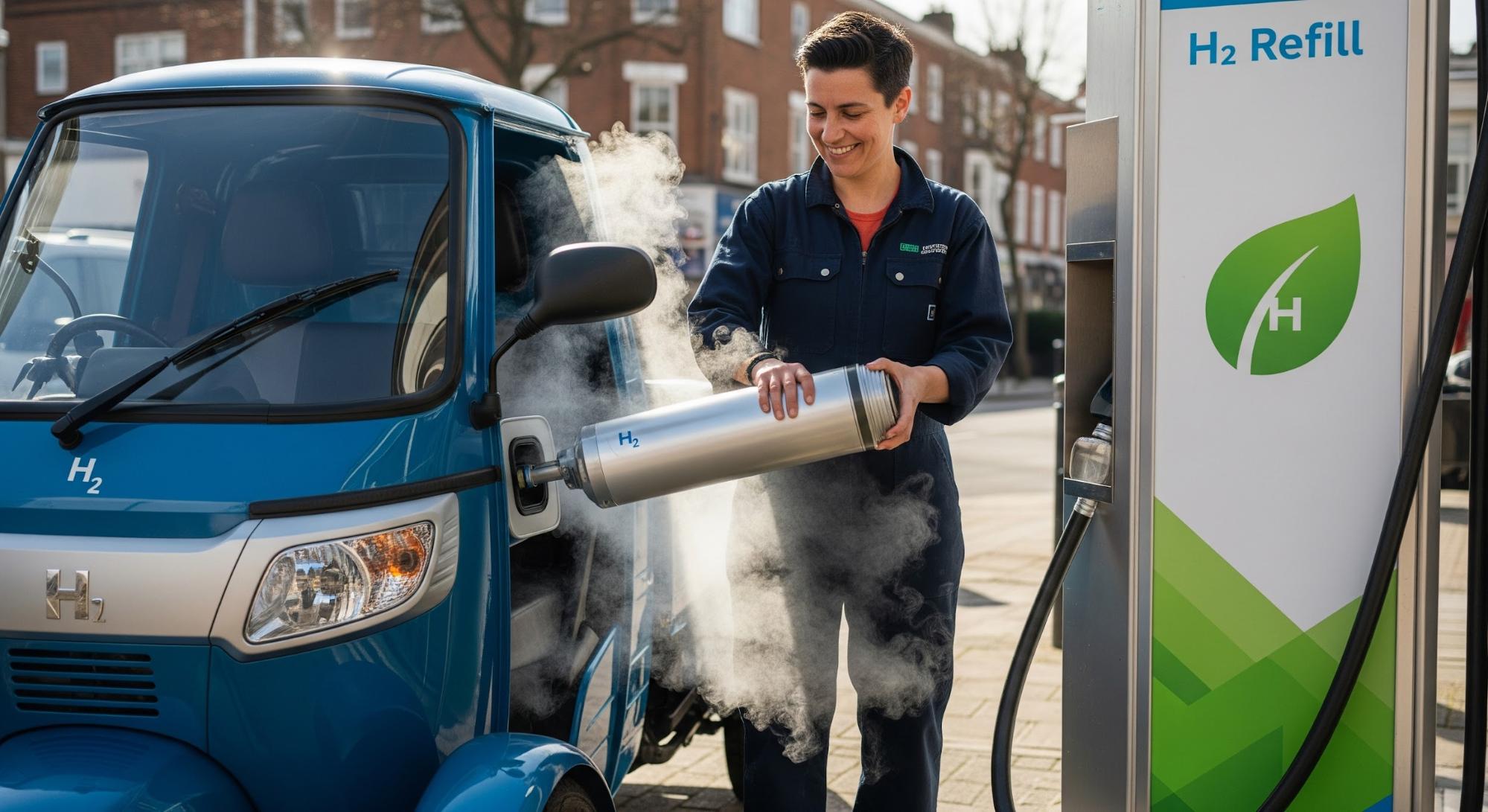
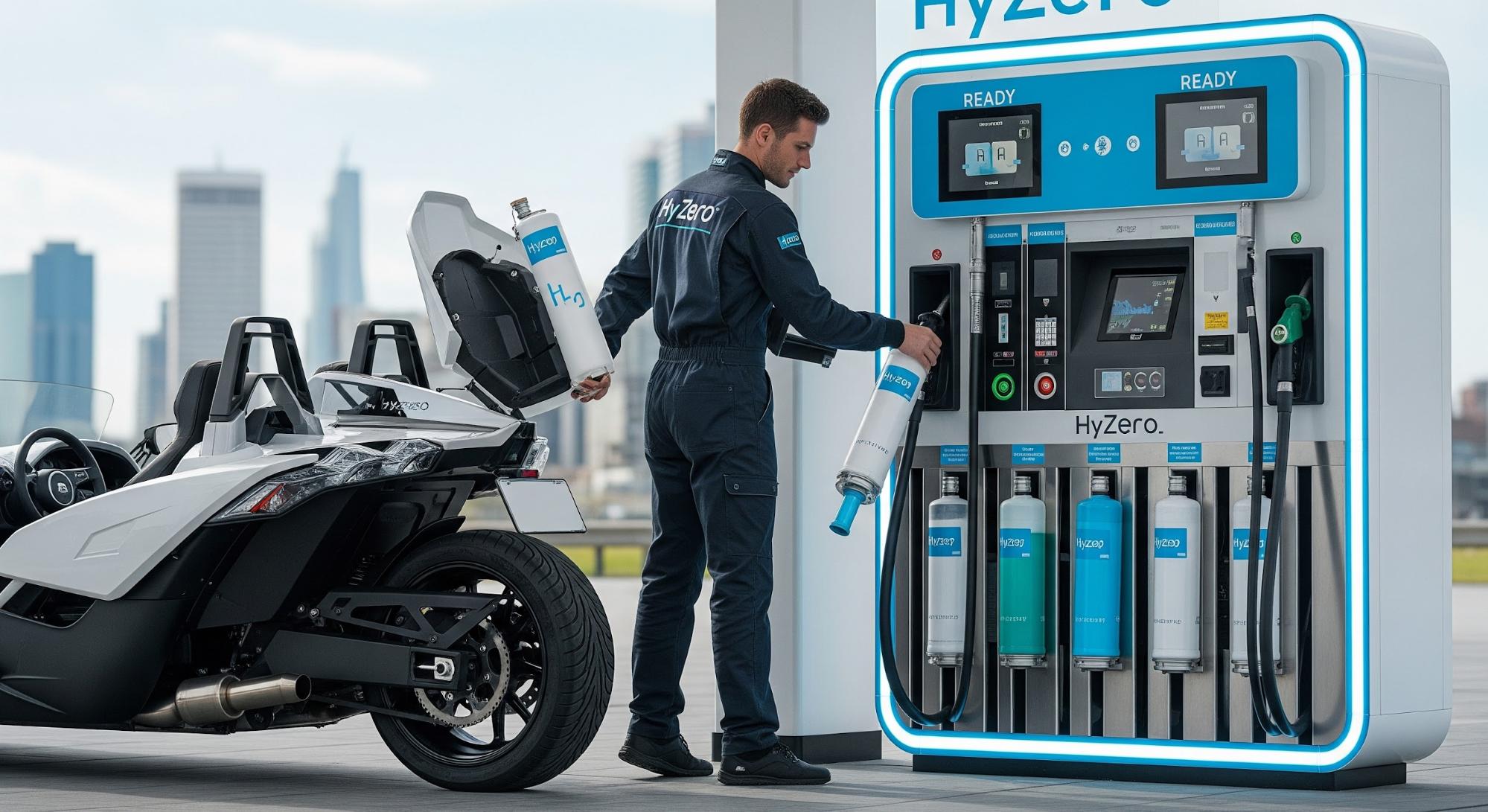
Atmospheric-Pressure Hydrogen for Safer, Low-Cost Fuel Cell Technology
Safer, simpler, and more affordable fuel cell technology using hydrogen at atmospheric pressure, with storage managed as per system requirements.
Safer, simpler, and more affordable fuel cell technology using hydrogen at atmospheric pressure, with storage managed as per system requirements.
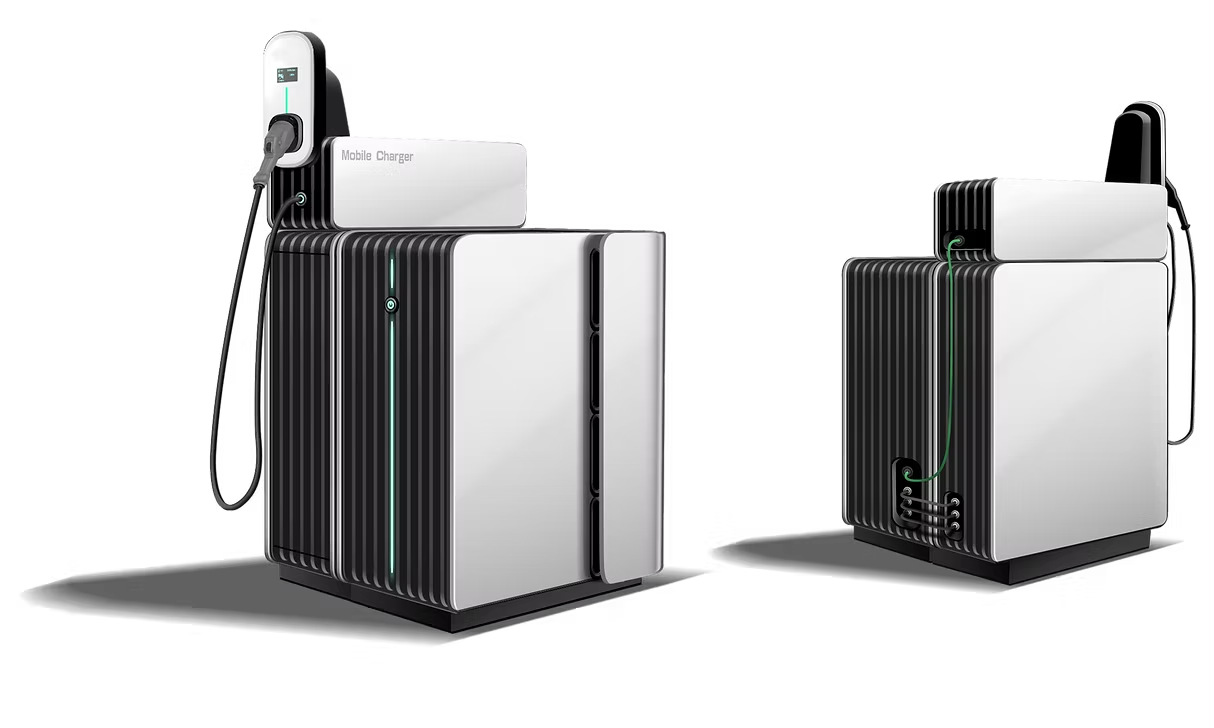
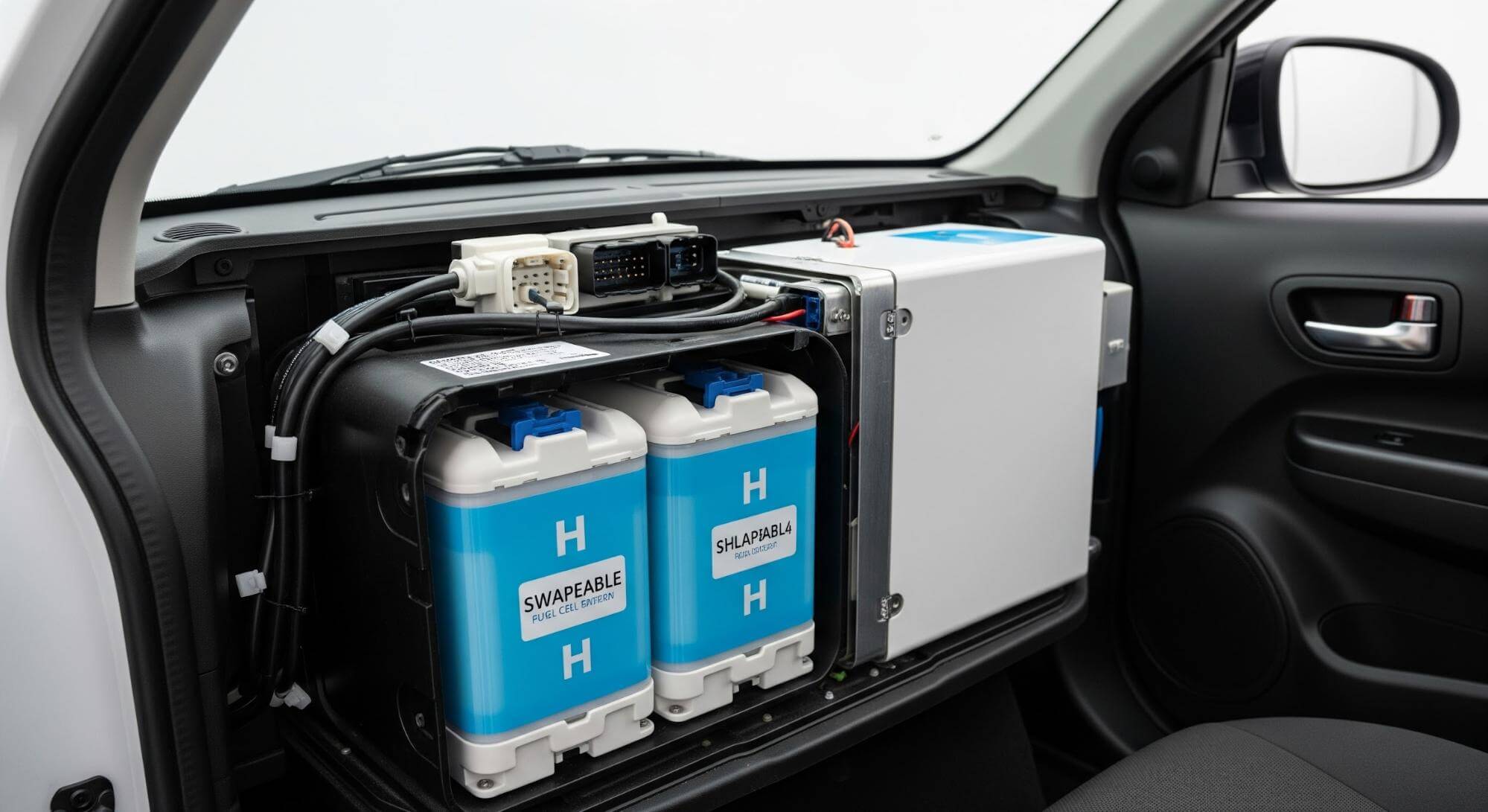
Compressed hydrogen adds cost, safety burden, and engineering complexity for small vehicles. High-pressure tanks, liquefaction, and decompression hardware make adoption difficult for OEMs . HyZero’s atmospheric-pressure hydrogen-use model provides a safer, simpler, and more cost-effective alternative for 3-wheelers and other compact hydrogen-powered vehicles.
HyZero powers the future of clean, portable mobility across industries
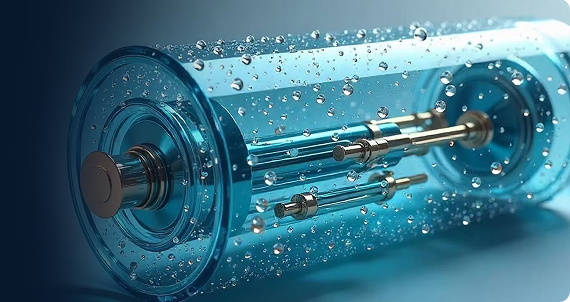
HyZero enables hydrogen used at atmospheric pressure; storage configured as per system requirements. This avoids on-vehicle compression, reduces risk, and lowers cost, making fuel cell technology easier to integrate into 1–10 kW fuel cell systems for hydrogen-powered 3-wheelers and other compact vehicles.
What Atmospheric-Pressure Hydrogen Enables

Hydrogen used at atmospheric pressure; storage aligned with system needs

Engineered for 1–10 kW fuel cell systems

No heavy tanks or high-pressure hardware

Reduced operational risk and easier compliance

Suitable for 3-wheelers, micro-mobility fleets, and EV conversions
Atmospheric-pressure hydrogen removes the risks tied to extreme compression, liquefaction, and heavy cylinders. This simplifies storage and reduces the chances of leaks or failures during daily operation.
Yes. Fuel cells operate efficiently at atmospheric pressure and deliver consistent performance for low-power mobility platforms. Leading hydrogen-technology pioneer HyZero applies this approach in its atmospheric-pressure system, enabling 1–10 kW fuel cell units to run smoothly without compression.
Compression demands high-pressure tanks, pumps, cooling units, and decompression hardware, all of which raise manufacturing and maintenance costs. Eliminating these components lowers system cost and simplifies engineering.
Absolutely. Fuel cell systems designed for atmospheric-pressure hydrogen deliver stable performance without the weight, risk, or complexity associated with high-pressure systems
Yes. Using hydrogen at atmospheric pressure improves safety, reduces vehicle weight, and makes integration easier, ideal for 3-wheelers, micro-mobility fleets, and other 1–10 kW fuel cell system applications.