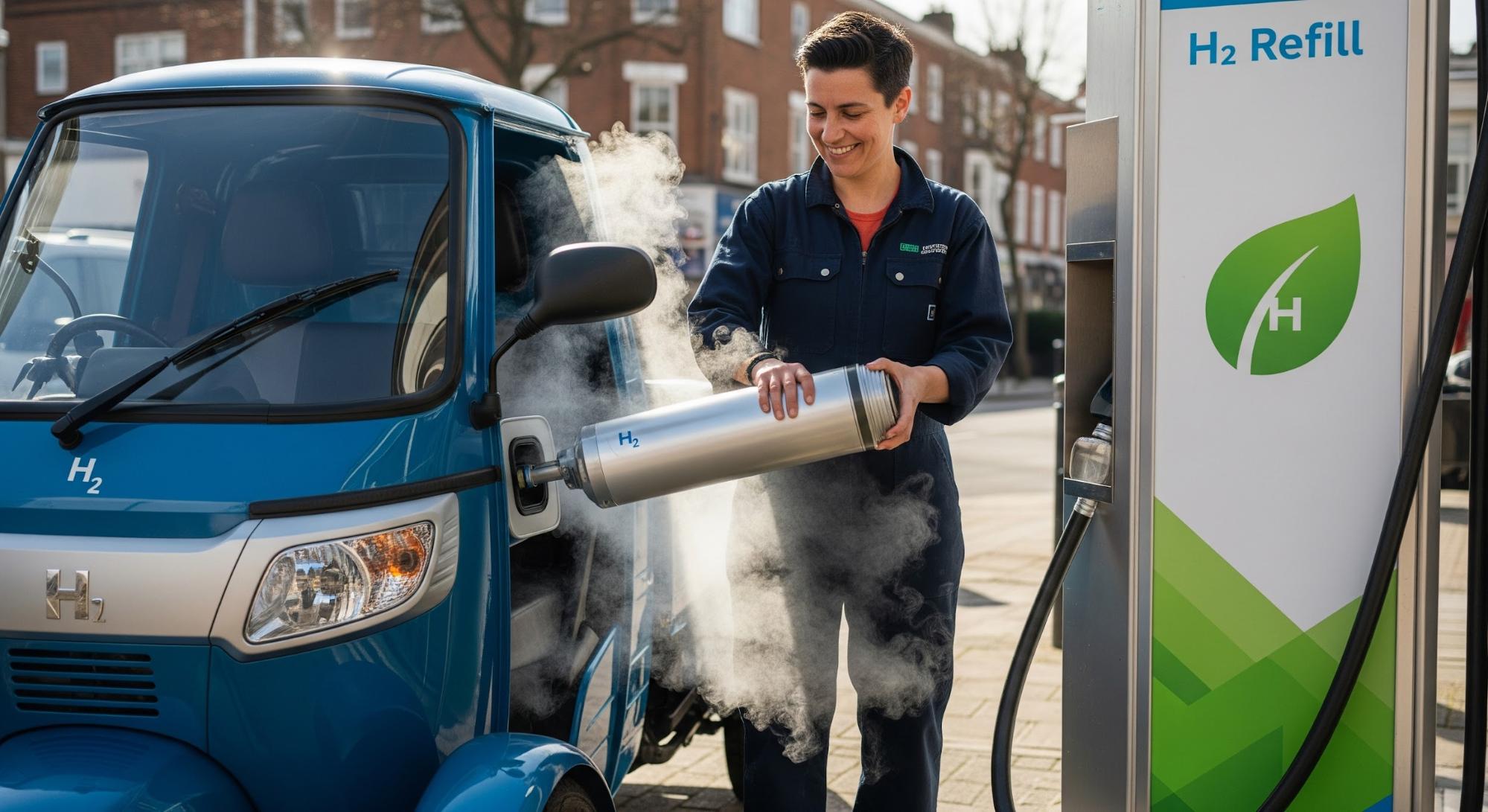
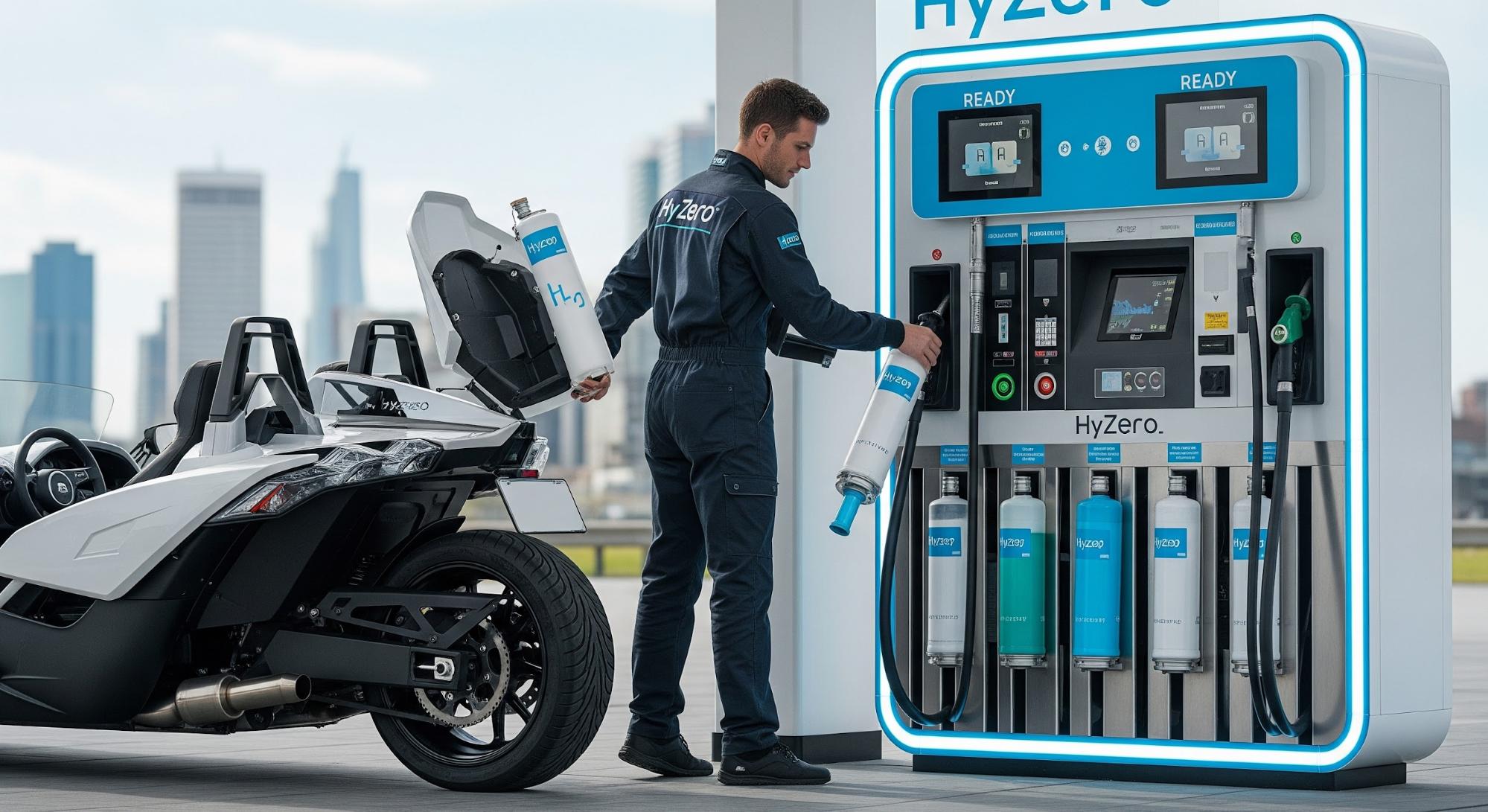
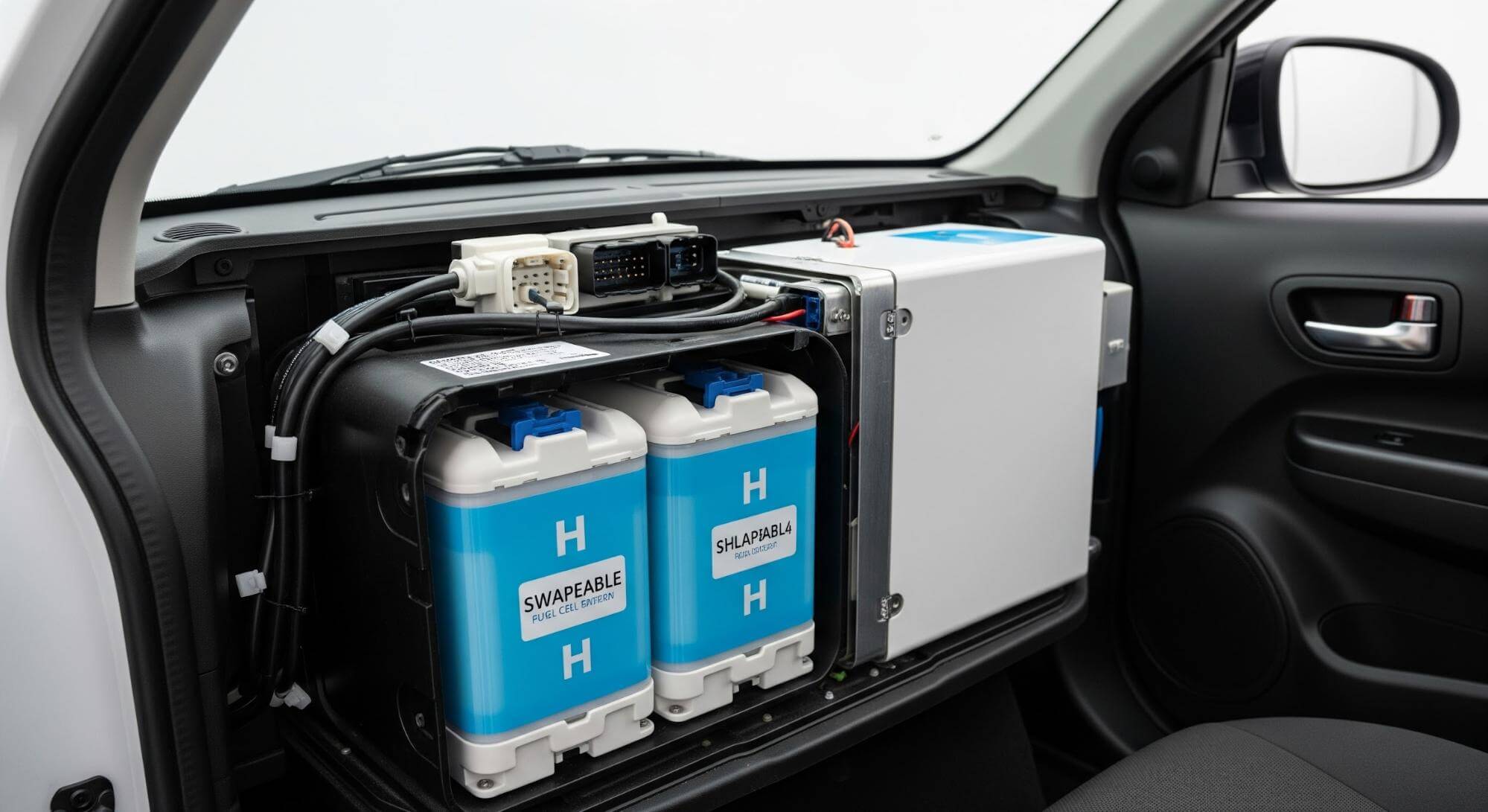
Cartridge Refilling Stations Built for Scalable Hydrogen Fuel Stations
Deploy compact, modular refilling units designed to power 3-wheelers and accelerate clean mobility expansions.
Deploy compact, modular refilling units designed to power 3-wheelers and accelerate clean mobility expansions.
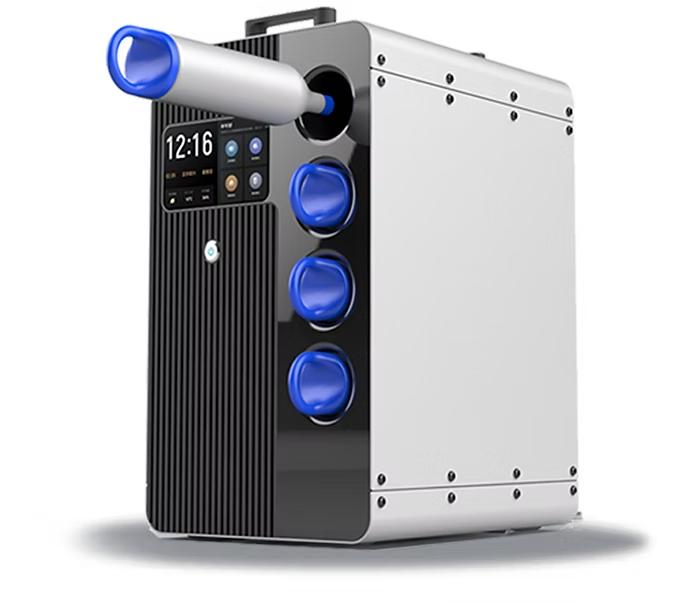
Hydrogen-powered vehicles in the 1–10 kW segment need fast, localized refueling, not large, high-pressure public stations. Long queues, high storage costs, and limited hydrogen mobility infrastructure slow fleet operations. Cartridge-based refilling solves this by giving OEMs (Original Equipment Manufactures) safe, compact hydrogen fuel stations that enable rapid PoCs, pilots, and city-wide deployments.
HyZero powers the future of clean, portable mobility across industries
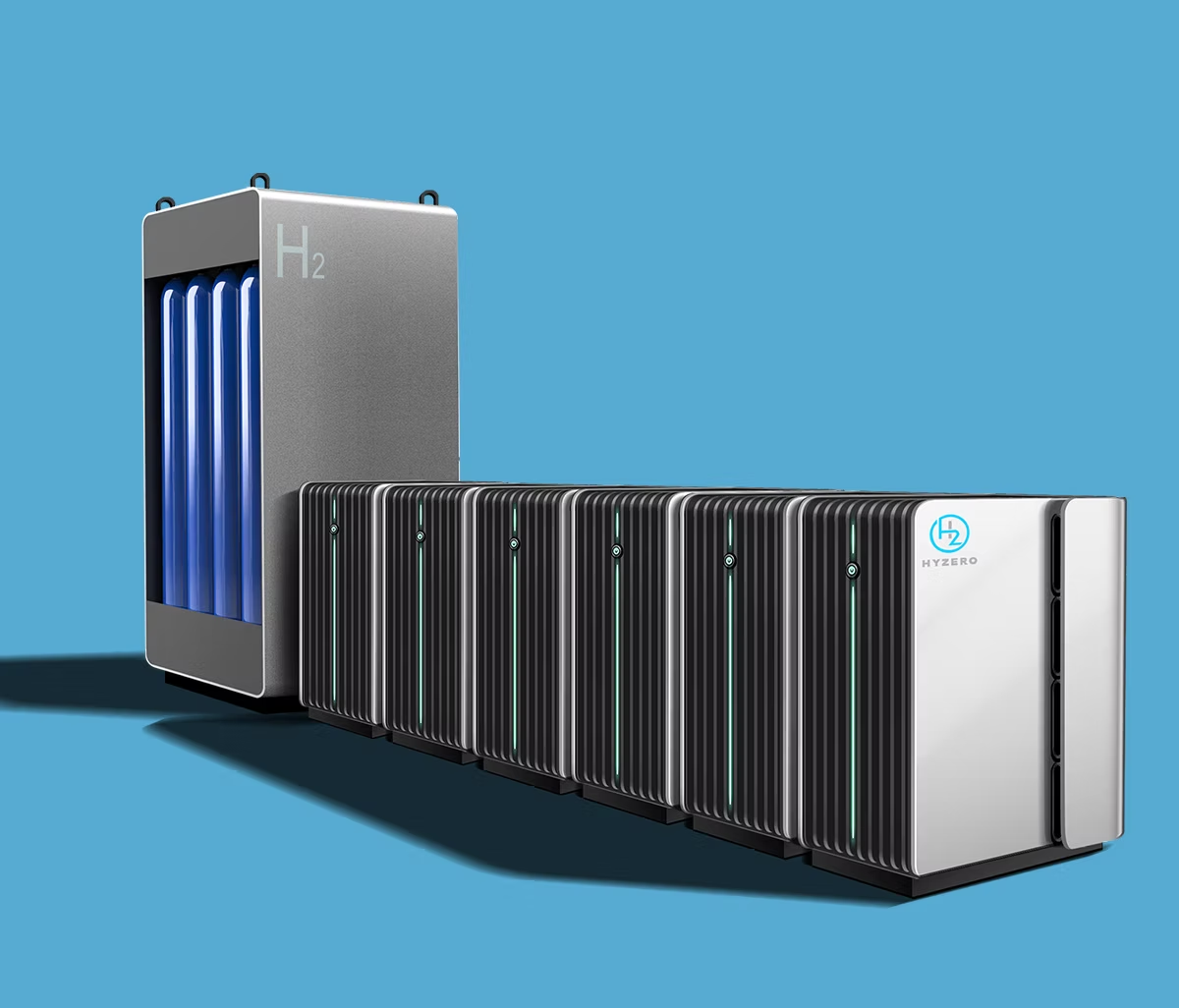
HyZero builds compact hydrogen fuel stations designed specifically for cartridge-based refueling, giving OEMs a plug-and-deploy network for hydrogen mobility.
What the Cartridge Refilling System Offers

Small-footprint stations for OEM plants and fleet depots

Optimized fill + swap cycles for high vehicle throughput

Hydrogen is used at atmospheric pressure with no high-pressure compression

Pipeline connection from local biohydrogen or existing supply

Built at 2–5% of the cost of conventional high-pressure stations
Cartridge stations refill using hydrogen supplied at atmospheric pressure , while cartridge storage follows system requirements. No high-pressure station compression is required, enabling quick turnaround at OEM plants or fleet depots.
Yes. They are built for compact hydrogen-powered vehicles in the 1–10 kW fuel cell system range, supporting 3-wheelers, micro-mobility fleets, and small fuel-cell platforms.
Deployment is fast and does not require large civil infrastructure. Clean-energy solutions provider HyZero offers modular refilling units that integrate directly with onsite hydrogen supply, enabling rapid installation for PoCs, pilots, or fleet expansion.
Yes. They avoid high-pressure compression at the station, reducing safety risks, compliance load, and operator training requirements
Absolutely. Their modular, compact design allows OEMs to replicate stations across cities, campuses, and fleet zones, making them ideal for scaling early hydrogen mobility initiatives quickly and cost-effectively.